
Rodent calls in Illinois follow a schedule. They start in September, peak in October and November, and continue all winter as animals that got in during the fall become bolder inside heated walls and attics.
If you are hearing scratching overhead at night or finding droppings in a cabinet, here is what is actually happening and what it takes to fix it permanently.
Sep–Nov
Peak rodent season
6 mm
Gap a mouse needs
3 wks
Between mouse litters
Quick Answer
Rodent calls in Illinois spike from September through November. Droppings, gnaw marks and night-time scratching are the signs. Bait alone never solves it a lasting fix is roughly one third trapping and two thirds sealing the building.
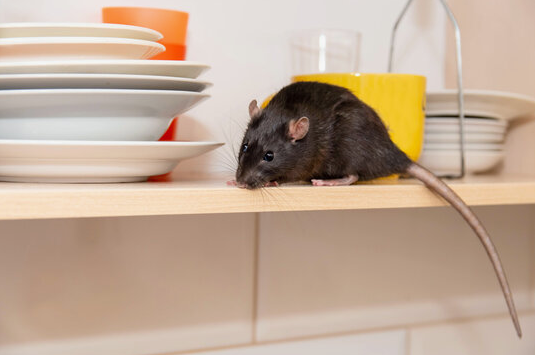
Why Rodents Matter More Than People Think
Mice and rats are not just unpleasant. They contaminate food and food-contact surfaces, their droppings and urine dry and become airborne through HVAC systems, and they carry fleas and mites indoors with them.
They also gnaw on wiring insulation, plumbing lines, ductwork, insulation, and stored belongings. Rodent-damaged wiring is a documented cause of house fires, which is the single best reason not to let a small problem sit.
They also multiply quickly. A house mouse can produce a new litter roughly every three weeks, and offspring reach breeding age in about two months. That compounding is why a homeowner who sees one mouse in October is often dealing with a dozen by January.
| House mouse | Norway rat | |
|---|---|---|
| Droppings | Rice-grain size, dark | Capsule shaped, up to 20 mm |
| Gap needed to enter | Width of a pencil | Size of a quarter |
| Where it nests | Behind appliances, stored boxes, wall voids | Basements, crawlspaces, burrows near foundations |
| Common in | Homes across all of Illinois | Urban Chicago, alleys, dumpster areas |
| First clue | Droppings in a cabinet | Burrow holes with smooth worn edges |
Mice or Rats? How to Tell
House mice
By far the most common rodent in Illinois homes. Signs include dark droppings the size and shape of a rice grain concentrated along walls, inside cabinets and drawers, and behind appliances; gnaw marks on food packaging and cardboard; nests of shredded paper, fabric, and insulation behind the refrigerator, inside stored boxes, or in the back of a pantry; and greasy rub marks along baseboards where they travel the same route every night. Mice can squeeze through a gap the width of a pencil.
Norway rats
Larger, heavier, and more common in urban Chicago, near alleys and dumpsters, and around older properties with sewer connections.
Look for capsule-shaped droppings up to three quarters of an inch, burrow openings near foundations, under sheds and decks, and in dense ground cover, with smooth worn edges from repeated use.
Rats favor basements, crawlspaces, and the lowest level of a structure. A rat needs a gap about the size of a quarter.
Other tells for either
Other Tells for Either
- Scratching, scurrying, or gnawing sounds in walls, ceilings, or the attic, mostly after dark.
- A persistent musty or ammonia-like smell in a closet, basement, or attic.
- A dog or cat fixating on one spot along a wall or under an appliance.
- Insulation pulled apart or tunneled in the attic or crawlspace.
- Sudden clusters of flies indoors, which can mean a rodent has died inside a wall.
Why Bait Alone Never Solves It
The most common mistake is treating rodents as a poison problem. Bait reduces the number of animals currently inside. It does nothing about the hole they used to get in, so the population refills from outside often within weeks.
Homeowners who buy bait every autumn are effectively paying a subscription to the same open gap in their foundation.
Interior bait use carries a second problem. A poisoned rodent frequently dies inside a wall void, ceiling, or duct chase, which creates an odor that lasts weeks and attracts blow flies and carpet beetles. Getting it out often means opening drywall.
For that reason we favor trapping inside the structure and reserve tamper-resistant bait stations for exterior pressure reduction where they are appropriate and safe around children, pets, and non-target wildlife.
How Professional Rodent Control Works
A serious rodent job is roughly one third trapping and two thirds construction.
The Five-Step Process
- Inspection. We map runways, nesting sites, droppings concentrations, and rub marks to understand how the animals move, then find every viable entry point. The usual suspects are the garage door seal, dryer and bathroom vents, gas and utility line penetrations, sill plate and rim joist gaps, foundation cracks, crawlspace vents, gaps at the roof line and soffit returns, and an uncapped chimney.
- Trapping. Traps go in the runways we identified, in the volume needed to knock the population down quickly, rather than one or two placed hopefully in the middle of a room. We check and reset them on a schedule.
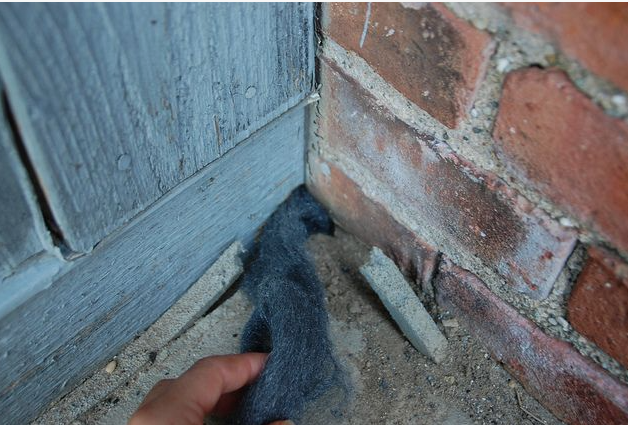
- Exclusion. This is the actual solution. Openings are sealed with materials rodents cannot chew through: copper mesh, hardware cloth, sheet metal, and appropriate sealants. Expanding foam by itself is not exclusion — mice tunnel straight through it. We add door sweeps, screen vents, and cap the chimney. Timing matters: sealing while animals are still inside traps them in the structure, so exclusion follows removal.
- Sanitation and cleanup. Contaminated areas are cleaned and disinfected and nesting material removed, which also eliminates the pheromone trails that attract the next rodent to the same route.
- Follow-up and monitoring. We confirm activity has stopped and keep monitoring in place through the season.
Why Sealing Comes Last
Sealing entry points while rodents are still inside traps them in your walls. Removal first, exclusion second in that order, every time.
Yard and Garage Conditions That Invite Rodents
Yard Conditions to Fix
- Bird feeders and spilled seed, which are among the most reliable rodent attractants in a suburban yard.
- Pet food stored in bags rather than sealed hard containers, and bowls left out overnight.
- Unsecured garbage, open compost, and dumpster areas close to entry doors.
- Firewood stacked against the house or garage, and stored lumber or pallets on the ground.
- Dense ivy, tall ornamental grasses, and shrubs growing tight against the foundation.
- Tree limbs touching the roof, which rats and squirrels use as a bridge to the roof line.
- Clutter and cardboard storage in the garage and basement, which provides ideal nesting harborage.
- Fallen fruit from ornamental and fruit trees left on the ground.
What About Squirrels, Raccoons, and Bats?
If the sound overhead is heavier than a mouse thumping, rolling, or daytime activity you are likely dealing with wildlife rather than rodents.
Squirrels, raccoons, opossums, skunks, and bats in attics, soffits, chimneys, and under decks are handled differently, with attention to Illinois wildlife rules, the presence of young in spring, and real injury and disease risk from direct contact.
Bats are protected and require timing around maternity season. Do not climb into the attic to look; call and let a technician assess it.
Book a Free Rodent Inspection
If you are hearing or finding evidence of rodents, the fall and winter months are when the problem grows fastest. Call +1 (833) 425-2058, and we will find the entry points, remove what is inside, and seal the structure so you are not repeating this next year.
Serving Crete, Chicago, Joliet, Tinley Park, Orland Park, Naperville, Rockford, Peoria, Springfield and communities across Illinois since 1980.
See our rodent removal in Illinois page for service details, or read the complete guide to full-service pest control in Illinois for the full picture on insects and rodents season by season.
Hearing Something in the Walls?
We find the entry points, remove what is inside, and seal the structure so next autumn is quiet.