
If something is crawling, flying, biting, or gnawing inside your home, you do not want a company that only handles one pest. You want one phone number that covers all of it. That is what full-service pest control means at Dependable Pest Control — a single licensed team that treats insects and rodents of every kind, from bed bugs and fleas to ants, roaches, spiders, yellow jackets, wasps, mosquitoes, flies, mice, and rats. We have been doing it for Illinois families and businesses out of Crete since 1980.
This guide is the complete picture of how professional pest management actually works in Illinois: which pests show up in which season, what a real inspection looks for, how treatment differs from pest to pest, what it costs, and how to keep problems from coming back. If you would rather skip the reading and just get an answer about your own house, call +1 (833) 425-2058 or request a free inspection and a technician will take a look.
1980
Serving Illinois since
40+
Years in business
$0
Inspection & estimate
7 days
Same-day availability
Quick Answer
Full-service pest control means one licensed team handling every insect and rodent — bed bugs, fleas, ants, roaches, spiders, yellow jackets, wasps, mosquitoes, flies, mice and rats — through inspection, targeted treatment, exclusion and follow-up. In Illinois, most single treatments run $100 to $400, and problems caught early cost a fraction of problems left for months.
In This Guide
- Why Illinois Homes Deal With So Many Different Pests
- What Full-Service Pest Control Actually Includes
- The Insects We Treat
- Rodent Control: Mice, Rats, and Why Bait Alone Never Works
- The Illinois Pest Calendar: What to Expect Each Season
- Residential and Commercial Programs
- Our Four-Step Process
- Safety Around Children and Pets
- What Pest Control Costs in Illinois
- DIY Versus Professional Treatment
- Prevention Checklist for Illinois Homeowners
- Signs You Should Call Today, Not Next Week
- Serving Illinois Since 1980
- Frequently Asked Questions
- Get a Free Inspection

Why Illinois Homes Deal With So Many Different Pests
Illinois sits in a climate band that is almost perfectly designed to keep pest control companies busy. Winters are cold enough to drive rodents and overwintering insects indoors, but not cold enough to wipe out populations. Summers are hot and humid enough for mosquitoes, flies, and cockroaches to breed at full speed. Spring brings heavy rain that floods soil and pushes ants and spiders up into wall voids, and fall brings a mass migration of anything looking for a warm place to spend the next four months.
On top of the weather, the housing stock works against homeowners. Older Chicago-area bungalows, brick two-flats, and century-old farmhouses in Will and Kankakee counties have stone foundations, unsealed rim joists, and utility penetrations that were never meant to be pest-proof. Newer subdivisions in Naperville, Plainfield, and Bolingbrook have their own weaknesses: soft landscaping mulch against siding, weep holes in brick veneer, and garage door sweeps that leave a quarter-inch gap along the concrete. A mouse needs a hole the width of a pencil. A cockroach needs less.
The result is that most Illinois properties are not dealing with one pest problem. They are dealing with a rotating cast. The family that calls us in March about pavement ants is often the same family that calls in July about wasps under the deck rail and in October about mice in the garage. Treating each of those as an unrelated emergency is expensive and exhausting. Treating the property as a whole system is cheaper, and it is the entire reason full-service programs exist.
What Full-Service Pest Control Actually Includes
The phrase gets used loosely in advertising, so here is what it means in practical terms when we say it. A genuine full-service program covers five things, in this order.
1. Inspection and correct identification
Nothing gets sprayed until we know what we are dealing with. Identification matters far more than most homeowners expect, because closely related pests respond to completely different treatments. Odorous house ants are baited; carpenter ants are traced back to a moisture-damaged nest site. German cockroaches are an indoor breeding problem; Oriental cockroaches are usually coming in from a drain or crawlspace. Bed bugs and carpet beetles leave similar-looking evidence and require nothing alike in response. A misidentified pest is the single most common reason a treatment fails and the customer thinks pest control does not work.
A proper inspection also maps the conditions that created the problem. Our technicians check foundation lines, sill plates, utility penetrations, attic vents, crawlspace access, water heater and furnace areas, under sinks, behind appliances, along baseboards, and the exterior perimeter including gutters, downspout discharge, grade slope, mulch depth, tree limbs touching the roof, and firewood storage. That is where the answer to why is this happening usually lives.
2. A treatment matched to the pest and the structure
There is no universal pesticide, and a company that treats every call the same way is guessing. Bed bugs require heat or a meticulous multi-round crack-and-crevice program with mattress encasements. Fleas require treatment coordinated with the pet veterinarian plus aggressive vacuuming to trigger dormant pupae. Roaches respond best to gel baits and insect growth regulators, not broadcast spraying, which just scatters them deeper into wall voids. Yellow jackets in a ground nest need direct nest injection, ideally after dusk. Mosquitoes need larval source reduction plus a residual barrier on the vegetation where adults rest. Rodents need trapping plus physical exclusion, because bait alone never fixes an open hole.
3. Exclusion and habitat correction
This is the step budget operators skip, and it is the one that determines whether you are still calling about the same pest next year. Exclusion means physically closing the building: copper mesh and sealant in rodent entry points, door sweeps, chimney and attic vent screens, repairing torn window screens, sealing utility gaps, and correcting the moisture that draws pests in the first place. Redirecting a downspout, fixing a slow drip under a sink, and cutting mulch back from the siding can do more for an ant problem than three treatments.
4. Follow-up and monitoring
Most pest life cycles run in stages, and eggs are almost never affected by the products that kill adults. That is why serious infestations require a second and sometimes third visit timed to the life cycle. Bed bugs and fleas in particular are defined by their egg stage; anyone promising one-and-done on either is overselling. Follow-up also confirms the treatment actually worked rather than simply moved the problem.
5. A guarantee that means something
If a pest returns inside the program period, the company should come back and re-treat without another invoice. We offer satisfaction and re-treatment guarantees because a program built on inspection and exclusion rarely needs them — and when it does, that is our problem to solve, not yours.
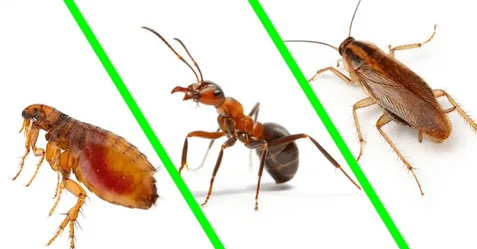
The Insects We Treat — and How Each One Is Handled
Below is a pest-by-pest breakdown of the most common calls we get across Illinois, what the early warning signs look like, and what an effective response involves.
| Pest | Telltale sign | What actually works |
|---|---|---|
| Bed bugs | Rust-colored spots on mattress seams | Heat or steam plus crack-and-crevice residual, 2–3 rounds |
| Fleas | Bites on ankles, pet scratching | Vet treatment + growth regulator + daily vacuuming |
| Ants | Trails to food or moisture | Slow-acting bait, never repellent spray |
| Cockroaches | One seen in daylight | Gel bait in voids + growth regulator + sanitation |
| Spiders | Webs in eaves, garage corners | Web removal, residual, reduce insect food source |
| Yellow jackets | Insects entering ground or wall void | Direct nest injection at dusk, then seal |
| Mosquitoes | Bites at dawn and dusk | Remove standing water + residual on shaded foliage |
| Mice & rats | Droppings, gnawing, night scratching | Trapping plus physical exclusion — never bait alone |
Bed Bugs
Bed bugs are the pest that causes the most distress and the most wasted money on failed DIY attempts. They are roughly the size and color of an apple seed, they hide within a few feet of where people sleep, and they are entirely a hitchhiking problem — they arrive on luggage, secondhand furniture, delivery boxes, and in shared laundry, not because a home is dirty.
The reliable early signs are rust-colored spotting along mattress seams and box spring edges, tiny dark fecal specks on the headboard or wall behind the bed, shed skins in the seams of upholstered furniture, and bite clusters that appear overnight in lines on arms, shoulders, and legs. By the time you see a live bug in daylight, the population is usually well established.
Treatment has to be systematic. We inspect adjoining rooms as well as the reported one, because bed bugs spread along walls and through shared framing in apartments and condos. Depending on the situation we use targeted heat, steam on seams and tufting, precision residual applications in cracks and crevices, and encasements to trap anything left in the mattress and box spring. We give the customer a prep list, and following it closely is the difference between two visits and five. What does not work: bug bombs and foggers, which repel bed bugs deeper into walls and spread them to neighboring units, and throwing out the mattress, which does nothing about the bugs already in the bed frame and baseboards. Full details are on our bed bug treatment in Illinois page.
Never Do This
Bug bombs and foggers do not kill bed bugs. They drive them deeper into wall voids and, in apartments and condos, push them straight into your neighbor’s unit. This is the single most common way a one-room problem becomes a whole-building problem.
Fleas
Fleas arrive with pets or with wildlife that nested in a crawlspace or attic, and they explode in Illinois humidity. Only about five percent of a flea population is the adult you can see; the rest are eggs, larvae, and pupae worked down into carpet fibers, pet bedding, upholstery seams, and floor cracks. Pupae can stay dormant for weeks and hatch in response to vibration and carbon dioxide, which is why a house can seem clear and then swarm the day a family returns from vacation.
Effective flea control has three legs, and skipping any one of them guarantees failure. The pet must be treated by a veterinarian with a current product on every animal in the household. The interior needs a treatment that includes an insect growth regulator to break the egg and larval stages. And the homeowner needs to vacuum thoroughly every day or two for two to three weeks, which pulls larvae out of carpet and shocks pupae into hatching while product is still active. Yards get spot-treated in shaded, moist areas where pets rest, since that is where outdoor breeding concentrates.
Ants
Ants are the most common call in Illinois and the most commonly mistreated. Spraying a visible trail with a store-bought aerosol kills the foragers you can see — less than ten percent of the colony — and in some species triggers budding, where the colony splits into multiple satellite nests and the problem doubles.
The species we see most are pavement ants, odorous house ants, field ants, and carpenter ants. The first three are nuisance ants, controlled through slow-acting baits that foragers carry back to feed the queen and brood, combined with an exterior perimeter treatment and correction of the moisture drawing them in. Carpenter ants are a different matter: they excavate galleries in damp structural wood, and finding them means finding a water problem — a leaking window, a failed roof flashing, a rotted deck ledger, a sweating pipe. Killing carpenter ants without fixing that moisture just leaves the door open for the next colony. Learn more on our ant removal in Illinois page.
Cockroaches
Roaches are a health issue, not just an unpleasant sight. They contaminate food surfaces and their shed skins and droppings are a documented asthma and allergy trigger, which matters most in homes with children. In Illinois we deal mainly with German cockroaches, which breed indoors year-round in kitchens and bathrooms, and Oriental and American cockroaches, which are typically coming in from sewers, floor drains, crawlspaces, and basements.
German cockroach control is a baiting and sanitation program, not a spraying program. Gel bait placed in the hinges and voids of cabinets, behind and under appliances, in motor housings, and along plumbing chases, paired with an insect growth regulator and monitoring stations, will collapse a population. Broad surface spraying is counterproductive because it makes roaches avoid the treated areas and disperse. Alongside treatment we look at the conditions keeping them fed: grease behind the range, cardboard storage, leaking traps, dish water left overnight, and pet food left down.
Spiders
Most Illinois spiders are harmless and are actually a sign of a different problem: spiders are predators, so a heavy spider population means there is a heavy insect population to eat. Reducing the food source is half the treatment. The other half is mechanical — knocking down webs and egg sacs around eaves, porch ceilings, window frames, garages, and basement corners, then applying a residual to those harborage points and reducing the exterior lighting that draws in flying insects at night. We pay particular attention to identifying and treating for the two species Illinois residents should take seriously, the black widow and the brown recluse, both of which prefer undisturbed clutter in basements, crawlspaces, garages, and stored boxes.
Yellow Jackets
Yellow jackets are the most dangerous stinging insect in Illinois, mostly because of where they nest and how they behave. Unlike paper wasps, they frequently build in the ground, in wall voids, behind soffits, inside old rodent burrows, and under decks and sheds, so the nest is often invisible until someone mows over it or leans on the wrong siding. They are aggressive in defense of the nest, they can sting repeatedly, and colonies grow through the summer to peak size in August and September — exactly when families are outdoors and when the workers turn scavenger and start showing up around trash cans, soda cans, and backyard cookouts.
Ground and void nests are not a DIY project. Pouring gasoline or boiling water into a ground nest is dangerous and rarely reaches the full nest, and spraying a wall void entrance without treating the void can drive the colony to chew inward and emerge inside the house. We locate the true nest, treat directly with an appropriate dust or aerosol formulation, work at dusk when the colony is inside and less active, wear proper protective equipment, and return to confirm the nest is dead before sealing the entry point. Anyone in the household with a known sting allergy should be away from the area during treatment. See our yellow jacket control page for more.
Safety Warning
Ground nests, wall-void nests and bald-faced hornet nests are not DIY jobs. Gasoline and boiling water rarely reach the whole colony, and spraying a wall-void entrance can drive yellow jackets to chew inward and emerge inside your home. If anyone in the household carries an epinephrine auto-injector, do not approach the nest at all.
Wasps and Hornets
Paper wasps build the familiar open, umbrella-shaped comb under eaves, porch ceilings, deck rails, playsets, grills, and inside mailboxes and light fixtures. They are less aggressive than yellow jackets but will defend a nest within a few feet, which makes nests near doorways and children a genuine problem. Bald-faced hornets build the large enclosed gray football-shaped nest in trees and on structures, and they are highly defensive — those should always be handled with professional equipment.
The practical approach is treat, remove, and prevent. We treat the nest, physically remove the comb so the site is not immediately reused, and then apply a residual to the eaves, soffits, rails, and other favored surfaces so scouting queens do not rebuild in the same protected spots. Early-season treatment in May and June, when a nest is still a queen and a handful of workers, is dramatically safer and cheaper than treating a mature nest in August. Details on our wasp removal in Illinois page.
Carpenter Bees
Carpenter bees are the ones that hover in front of you and then disappear into a perfectly round, half-inch hole in a deck rail, fascia board, or pergola. They do not eat wood; they tunnel into it to nest, favoring untreated, unpainted softwood. A single season of tunneling looks cosmetic, but galleries get reused and extended year after year, and woodpeckers tear the wood open to get at the larvae, which is where the expensive damage comes from. We treat active galleries, seal them after the treatment has worked through, and recommend painting or sealing vulnerable wood, since bare wood is the invitation. More on our carpenter bee control page.
Mosquitoes
Mosquitoes are a public health pest in Illinois, not merely a nuisance, given West Nile virus activity across the state most summers. The single most important fact for homeowners is that mosquitoes breed in still water, and the amount required is trivial — a clogged gutter, a tarp fold, a plant saucer, a forgotten bucket, a birdbath left a week, a tire, a corrugated downspout extension holding a cup of water. Most of the mosquitoes biting you in your yard were born in your yard or your immediate neighbors.
So control starts with source reduction: we walk the property and identify every water-holding item and low spot, and we treat what cannot be drained with a larvicide. Then we apply a residual barrier treatment to the shaded resting sites where adults spend the day — the undersides of leaves, dense shrubs, ivy, tall grass, fence lines, and under decks. Treatments are repeated through the season because they degrade in sun and rain, and because new adults keep flying in. Homeowners who add a fan on the patio, keep grass cut, thin dense plantings, and refresh birdbaths weekly get noticeably better results. See mosquito control in Illinois.
Flies
Flies are a sanitation and identification puzzle more than a spraying problem, because each type points to a different source. House flies and blow flies indicate an organic breeding source: garbage, pet waste, a dumpster area, compost, or in the worst case a dead rodent in a wall or attic. Fruit flies breed in fermenting residue in drains, under-appreciated spots like the bottom of a recycling bin, mop closets, or a bag of forgotten potatoes. Drain flies breed in the biofilm inside slow or unused drains. Cluster flies overwinter by the hundreds in attics and wall voids and appear at sunny windows on the first warm day of late winter.
The fix is always the source. We identify the fly, find and eliminate the breeding material, treat drains biologically where relevant, and use exclusion, air curtains, or light traps in commercial kitchens and food service. Surface spraying alone controls nothing if a source is still producing new flies every day, which is why fly complaints in restaurants and food plants get handled as sanitation audits with a treatment attached.
Termites
Termites belong in a full-service conversation because they are the pest most likely to cost tens of thousands of dollars while remaining completely invisible. Eastern subterranean termites are active throughout Illinois, they enter from soil contact through foundation cracks and expansion joints, and they consume wood from the inside out. The signs are mud tubes on foundation walls, wood that sounds hollow when tapped, paint that looks blistered or rippled, and spring swarms of dark-winged insects near windows and light sources — often mistaken for flying ants.
Treatment means either a continuous soil termiticide barrier around the structure or a monitored baiting system, plus correcting the wood-to-soil contact, drainage, and moisture problems that made the structure attractive. Annual inspections are the cheapest insurance in pest control, particularly before buying or selling a home. See termite control in Illinois.
Stored Product, Fabric, and Occasional Invaders
A full-service program also covers the pests nobody plans for. Pantry pests such as Indian meal moths and sawtoothed grain beetles arrive inside packaged flour, birdseed, pet food, and dried goods, and are solved by locating and discarding the infested package, deep-cleaning the shelving, and moving staples into sealed containers. Clothes moths and carpet beetles damage wool, silk, and stored natural fibers in closets and attics. Boxelder bugs, stink bugs, Asian lady beetles, crickets, earwigs, silverfish, centipedes, and millipedes all push indoors seasonally and respond well to a fall exclusion and perimeter program rather than repeated interior spraying.
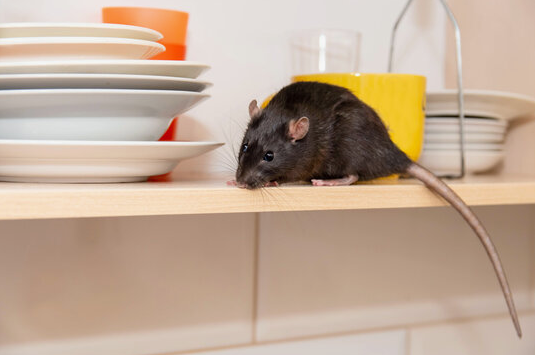
Rodent Control: Mice, Rats, and Why Bait Alone Never Works
Rodents are the highest-stakes pest in most Illinois homes because they combine health risk with property damage. They contaminate food and surfaces, their droppings and urine aerosolize into HVAC systems, they carry fleas and mites indoors, and they gnaw wiring insulation, which is a documented cause of house fires. They also reproduce fast enough that a small problem becomes a serious one within a couple of months.
What you are actually seeing
House mice are the most common. They leave dark, rice-grain droppings concentrated along walls and inside cabinets, gnaw marks on food packaging, shredded insulation or paper nests behind appliances and in stored boxes, and greasy rub marks along baseboards where they travel the same route nightly. Norway rats are larger, favor basements, crawlspaces, sewers, and burrows near foundations and garbage areas, and leave capsule-shaped droppings and burrow holes with smooth, worn openings. Scratching in walls or ceilings at night, a musty ammonia smell, and pets fixating on a spot along a wall are all early tells.
How professional rodent work is done
A serious rodent job is roughly one-third trapping and two-thirds construction. We start with an inspection that maps runways, nesting sites, and every possible entry point, checking the garage door seal, dryer and bathroom vents, utility and gas line penetrations, sill plate gaps, foundation cracks, crawlspace vents, soffit and roof-line gaps, chimney, and the gap under thresholds. Then we set traps in the runways we identified, not randomly, because rodents follow predictable paths. Interior trapping is preferred over interior bait, since a poisoned rodent that dies in a wall void creates an odor and blow fly problem that is worse than the original complaint. Exterior tamper-resistant bait stations are used where appropriate to reduce pressure from outside.
Then comes exclusion, which is the actual solution. Openings get sealed with materials rodents cannot chew through — copper mesh, hardware cloth, sheet metal, and appropriate sealants rather than expanding foam alone, which mice tunnel straight through. We add door sweeps, screen vents, and cap chimneys. Finally we handle sanitation: cleaning and disinfecting contaminated areas, removing nesting material, and advising on the yard conditions that support rodents, such as bird feeders, pet food, unsecured garbage, dense ground cover, and woodpiles against the house. Full details are on our rodent removal in Illinois page.
Pro Tip
Expanding foam is not exclusion — mice chew straight through it. Entry points need copper mesh, hardware cloth, sheet metal or an appropriate sealant. And sealing before the rodents are removed traps them inside the walls, which is a worse problem than the one you started with.
Wildlife you should not handle yourself
Squirrels, raccoons, opossums, bats, and skunks in attics, chimneys, soffits, and under decks are common in Illinois and are handled differently from rodents, with attention to state wildlife rules, young in the nest during spring, and the significant health and injury risk of direct contact. Bats in particular are protected and require timing around maternity season. If you hear something heavier than a mouse overhead, call rather than climbing into the attic.
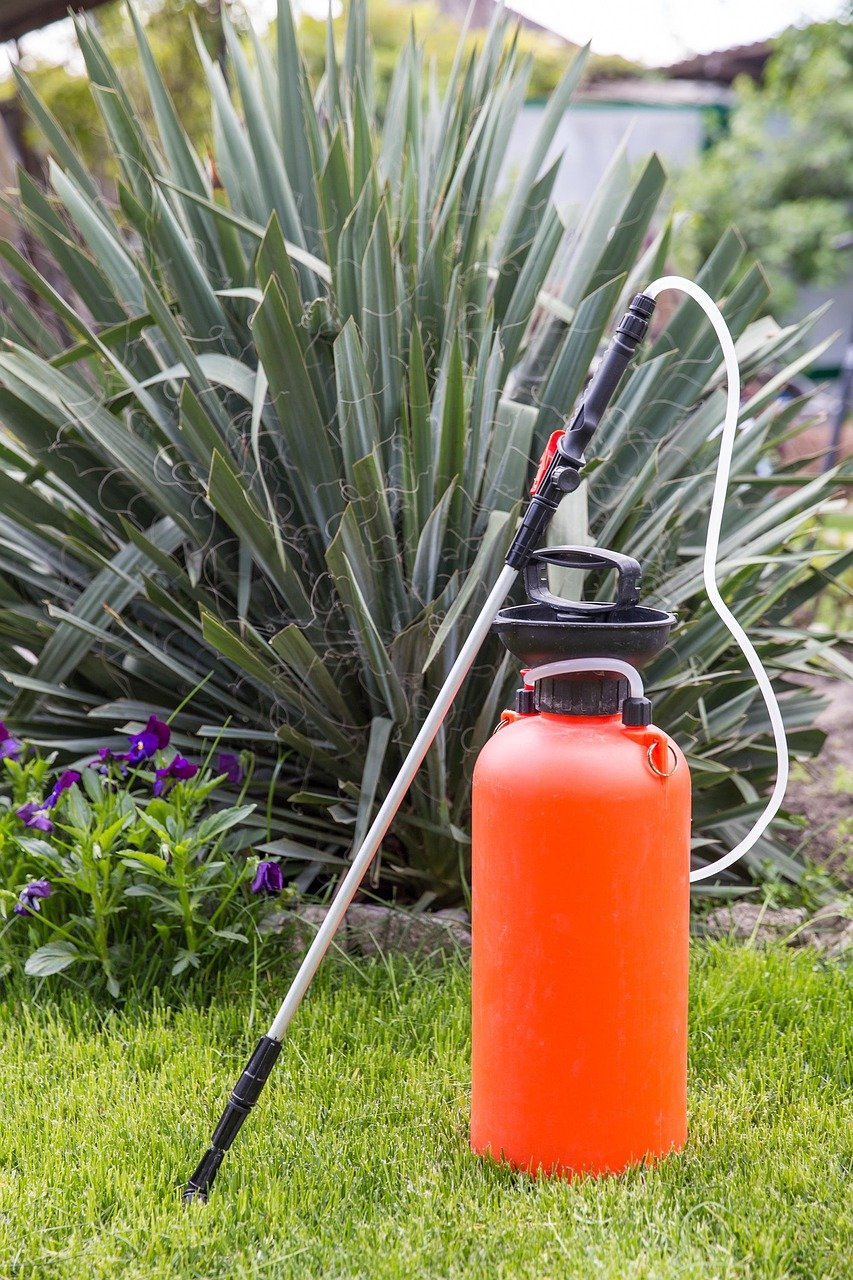
The Illinois Pest Calendar: What to Expect Each Season
Pest pressure in Illinois is predictable enough that you can plan around it. Knowing what is coming lets you treat preventively, which is always cheaper than treating an infestation.
| Season | What shows up | What to do now |
|---|---|---|
| Spring (Mar–May) | Ants, termite swarms, boxelder bugs, new wasp queens | Perimeter treatment, termite inspection, knock down founding nests |
| Summer (Jun–Aug) | Mosquitoes, flies, roaches, wasps, bed bugs from travel | Mosquito barrier program, stinging insect removal |
| Fall (Sep–Nov) | Mice, rats, stink bugs, aggressive yellow jackets, spiders | Exclusion work — the highest-value month of the year |
| Winter (Dec–Feb) | Rodents in walls, German roaches, cluster flies | Interior treatment, attic and crawlspace inspection |
Spring (March through May)
Overwintering insects wake up and become visible: boxelder bugs and lady beetles at windows, the first ant trails in kitchens and along driveways, and termite swarms on warm, humid days after rain. Wasp and yellow jacket queens begin small founding nests under eaves and in cavities, which is the ideal moment to intervene. Spring rain floods soil and drives ants, spiders, millipedes, and centipedes toward foundations. This is the season for the exterior perimeter treatment and the annual termite inspection.
Summer (June through August)
Peak activity for nearly everything. Mosquito populations build with each rainfall, fly pressure rises with heat, ant colonies reach full foraging strength, and wasp and yellow jacket nests grow to hundreds or thousands of workers. Bed bug reports spike with summer travel and moving season. Cockroach activity increases in humidity. This is the season for mosquito barrier programs, stinging insect removal, and regular exterior maintenance.
Fall (September through November)
The migration indoors. Mice and rats start looking for winter shelter in earnest, and the majority of rodent calls begin now. Yellow jackets turn aggressive and scavenging as their food sources collapse. Stink bugs, cluster flies, lady beetles, and spiders concentrate on sunny exterior walls and find their way through gaps. Fall is the single most valuable time of year for exclusion work — sealing the building before the animals are inside is far easier than removing them after.
Winter (December through February)
Activity moves inside and out of sight. Rodents already in the structure become bolder and more audible in walls and attics. German cockroaches thrive in heated kitchens. Cluster flies appear at windows during thaws. Bed bugs continue year-round, since they live entirely in the conditioned space. Winter is a good time for interior work, monitoring, attic and crawlspace inspections, and planning next season.
Residential and Commercial Programs
Homes and businesses need the same expertise applied under different constraints. For homes we build around the family: treatments scheduled when it is convenient, products and placements chosen with children and pets in mind, and clear instructions on what to do before and after a visit. Most residential customers are best served by a quarterly or seasonal program that keeps the perimeter treated and catches problems while they are small, rather than paying for emergencies.
For commercial properties — restaurants, bars, food processing, grocery, retail, warehouses, offices, multifamily buildings, schools, medical and senior facilities, and hospitality — the requirements expand. Businesses need documented service records for health inspectors and auditors, discreet scheduling outside of operating hours, pest sighting logs, monitoring devices with recorded readings, and sanitation recommendations they can act on. In multifamily housing, treatment has to be coordinated across adjoining units, because bed bugs and roaches do not respect lease boundaries. We work with property managers on building-wide programs for exactly that reason.
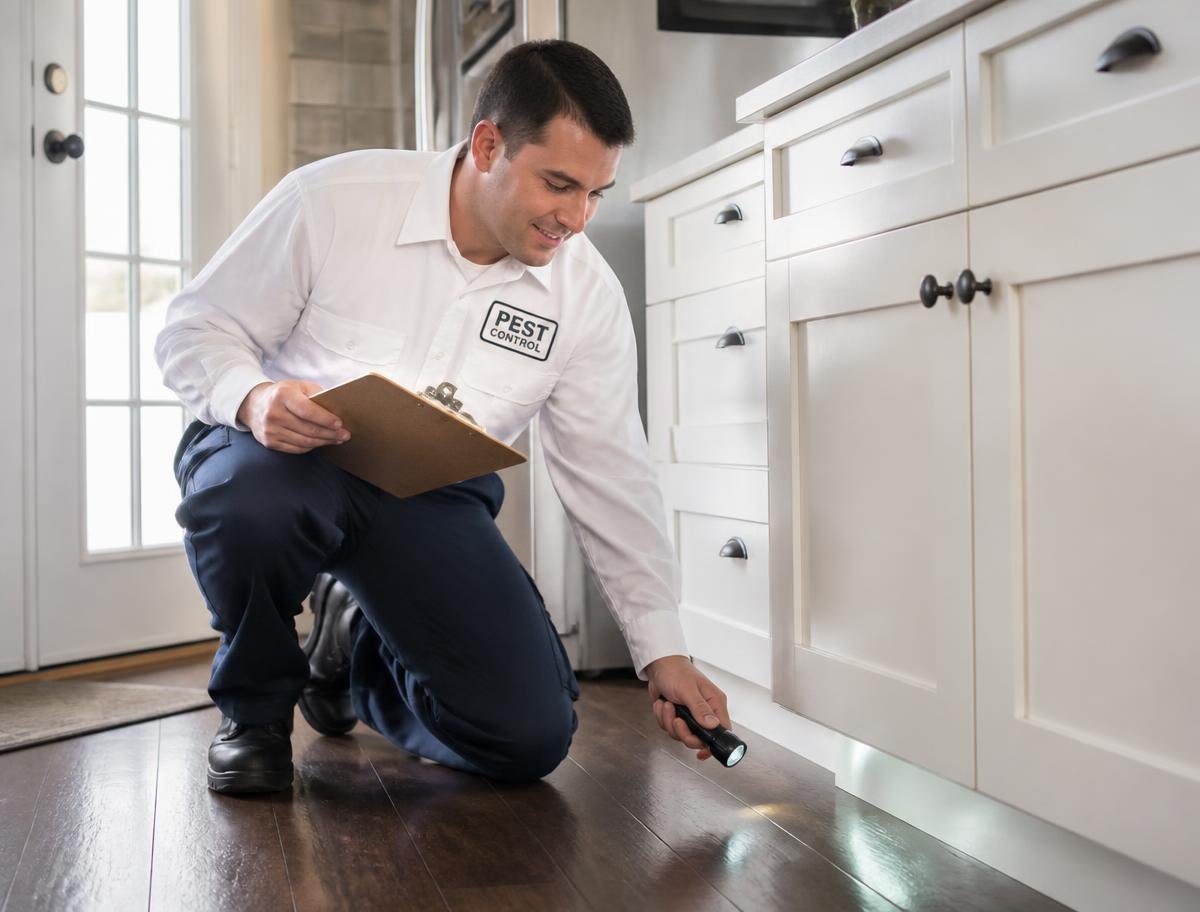
Our Four-Step Process
How It Works
- Call or book online. Reach us at +1 (833) 425-2058 or request a free inspection, and we schedule a time that works — including same-day and next-day appointments across the Chicago metro and throughout Illinois.
- Free inspection. A licensed technician inspects the property, identifies the pest and the entry points, determines the scope, and explains what is happening in plain language, with a written price before any work starts.
- Targeted treatment. We apply the treatment matched to that specific pest and structure, using the lowest-risk effective products and placing them where the pest lives rather than spraying broadly.
- Follow-up and guarantee. We return to confirm the problem is resolved, complete any exclusion work, and re-treat at no additional cost if the pest comes back during the program period.
Safety Around Children and Pets
This is the question we are asked most, and it deserves a direct answer. Modern professional pest control is not the broadcast spraying people remember from decades ago. The products we use are registered for the specific use, applied at labeled rates by licensed applicators, and placed strategically — in cracks, voids, bait stations, and along structural lines rather than across open floors and surfaces where people and pets spend time. In many cases the most effective option is also the least chemical: heat for bed bugs, trapping and sealing for rodents, drain treatment for flies, and physical removal for spider webs and wasp combs.
Practical guidance for any treatment: keep children and pets out of the treated area until surfaces are dry, usually a couple of hours; cover or remove fish tanks and pull air pumps during interior applications; put away pet food and water bowls and food-contact items before we arrive; and lift bird cages or move them out of the room. Your technician will tell you exactly what applies to your visit, and we are always willing to discuss lower-impact options if someone in the household is pregnant, immunocompromised, has asthma, or has chemical sensitivities.
What Pest Control Costs in Illinois
Most single treatments run between about one hundred and four hundred dollars, and we give free estimates over the phone before anyone is dispatched. The range exists because a few factors genuinely change the work involved.
| What changes the price | Lower end | Higher end |
|---|---|---|
| The pest | Wasp nest, single ant trail | Bed bugs, German roaches, rodents with exclusion |
| How long it has run | Caught in week one | Established over months |
| Property size | One-story home, no crawlspace | Multi-floor, finished basement, multiple buildings |
| Exclusion needed | Sealing a few penetrations | Re-screening attic, hardware cloth in crawlspace |
| Program type | Recurring quarterly plan | One-off emergency call |
- The pest. A wasp nest removal is a short, contained job. A bed bug or German cockroach program involves multiple visits and prep, and a rodent job includes exclusion labor and materials.
- Severity and duration. A problem caught in week one costs a fraction of the same problem caught in month six.
- Property size and construction. Square footage, number of floors, crawlspaces, finished basements, and multi-building sites all add inspection and treatment area.
- Extent of exclusion needed. Sealing three penetrations is quick; re-screening an attic, replacing rotted trim, or hardware-clothing a crawlspace is real construction work.
- One-time versus ongoing. Recurring quarterly programs cost less per visit than one-off emergency calls and prevent most of them from happening.
Two things we do not do: quote a price without knowing what the problem is, and add services during a visit that were not in the estimate. If a technician finds something unexpected, you hear about it and decide before anything else happens.
DIY Versus Professional Treatment
There is a real place for DIY. Sealing gaps, installing door sweeps, fixing screens, cleaning gutters, emptying standing water, storing food in sealed containers, decluttering a basement, keeping garbage secured, cutting back vegetation touching the house, and vacuuming frequently are all things a homeowner can do that meaningfully reduce pest pressure. Store-bought traps for the occasional single mouse and a can of wasp spray for a small, reachable paper wasp nest in daylight-safe conditions are reasonable too.
Where DIY reliably fails is on pests with hidden populations, complex life cycles, or genuine danger: bed bugs, German cockroaches, fleas, carpenter ants, termites, established rodent infestations, and yellow jacket nests in the ground or in walls. In those cases the common outcome is not simply no result — it is a worse result. Foggers scatter bed bugs and roaches into adjoining rooms and units. Repellent sprays cause ant colonies to bud into several colonies. Over-the-counter rodent bait used indoors puts carcasses in wall voids. Sealing a rodent entry hole while animals are still inside traps them in the structure. Each of those mistakes makes the eventual professional job longer and more expensive.
Prevention Checklist for Illinois Homeowners
Do These 12 Things
- Seal gaps around utility penetrations, hose bibs, dryer vents, and cable and gas lines with materials rodents cannot chew.
- Install and maintain door sweeps, especially on garage and basement doors, and repair damaged window and vent screens.
- Keep mulch, soil, and landscaping at least six inches below siding, and eliminate wood-to-soil contact.
- Store firewood off the ground and away from the structure, not against the house or garage.
- Clean gutters, extend downspouts away from the foundation, and correct grading so water drains away from the building.
- Eliminate standing water weekly — saucers, buckets, tarps, toys, tires, birdbaths, and clogged low spots.
- Fix plumbing drips, condensation, and any damp wood promptly, since moisture attracts carpenter ants, termites, roaches, and silverfish.
- Store pantry staples and pet food in sealed hard containers, and do not leave pet food or water out overnight.
- Take out garbage regularly, use bins with tight lids, and keep dumpster areas clean and away from entry doors.
- Reduce clutter and cardboard in basements, garages, and closets, which is prime harborage for roaches, spiders, and rodents.
- Trim tree limbs and shrubs so they are not touching the roof or walls, which serve as bridges for rodents and insects.
- Inspect luggage, secondhand furniture, and mattresses before bringing them inside to avoid importing bed bugs.
Signs You Should Call Today, Not Next Week
Call Today If You See This
- Bites appearing overnight, or rust-colored spotting on mattress seams.
- Scratching, scurrying, or gnawing sounds in walls, ceilings, or the attic at night.
- Droppings in cabinets, drawers, along baseboards, or in the garage or basement.
- A cockroach seen in daylight, which usually indicates a crowded, established population.
- Mud tubes on foundation walls, hollow-sounding wood, or a spring swarm of winged insects indoors.
- Stinging insects entering a wall void, soffit, or the ground near a walkway, deck, or play area.
- Sudden clusters of flies indoors with no obvious source, which can indicate a dead animal in a wall or attic.
- Any pest problem in a food-service, healthcare, or childcare setting, where an inspection issue is a business risk.
Serving Illinois Since 1980
Dependable Pest Control is based in Crete, Illinois and serves the Chicago metro, the northern and western suburbs, and communities throughout central and southern Illinois — including Chicago, Naperville, Joliet, Aurora, Schaumburg, Elgin, Evanston, Rockford, Peoria, Springfield, Bloomington, Normal, Champaign, Decatur, Belleville, Waukegan, Tinley Park, Orland Park, Crystal Lake, Plainfield, Bolingbrook, Des Plaines, Arlington Heights, Downers Grove, Skokie, Wheaton, Elk Grove Village, Northbrook, and Lake Forest. If your city is not on the list, call and ask — we very likely cover it. See our service areas page.
Every technician is licensed, insured, and background-checked, and we have been locally owned and operated for more than four decades. That longevity is not marketing. It is the result of doing the inspection first, explaining the problem honestly, treating the cause instead of the symptom, and standing behind the work.
Frequently Asked Questions
How quickly can someone come out?
Same-day and next-day appointments are available across the Chicago metro and throughout Illinois, and we handle emergency situations such as aggressive stinging insect nests and sudden rodent activity outside standard hours. Call +1 (833) 425-2058 and we will tell you the earliest realistic window rather than an optimistic one.
Do you treat every pest, or just the common ones?
Every pest on this page and then some: bed bugs, fleas, ants, cockroaches, spiders, yellow jackets, wasps, hornets, carpenter bees, mosquitoes, flies, termites, mice, rats, pantry and fabric pests, and seasonal invaders, plus nuisance wildlife handled under Illinois rules. One call covers all of it, for homes and for commercial properties.
How many visits will it take?
A wasp nest or a small ant problem is often resolved in a single visit. Bed bugs, fleas, and German cockroaches typically require two or three visits timed to the life cycle, because eggs survive treatments that kill adults. Rodent jobs usually involve an initial visit, one or two trap checks, and an exclusion appointment. We tell you the expected number up front.
Will the pests come back?
Not if the cause was addressed. Any structure can be re-invaded from outside, which is why exclusion and seasonal maintenance matter so much, and why we include re-treatment in our program guarantees. If something returns during your program period, we come back and handle it at no extra charge.
Is it safe for my kids and pets?
Yes, when it is done properly. We use targeted placements and the lowest-risk effective products, often with non-chemical methods like heat, steam, trapping, and exclusion doing much of the work. Your technician will give you specific re-entry guidance for your treatment, and we will adjust the approach for households with health sensitivities.
Do I need to leave the house?
For most treatments, no — you simply keep out of the treated areas until they are dry. Whole-room bed bug heat treatments and certain interior applications do require the household and pets to be out for a set period, and we will tell you exactly how long when the treatment is scheduled.
Get a Free Inspection
If you are dealing with insects, rodents, or something you cannot identify, the fastest path to an answer is a licensed set of eyes on the property. Call +1 (833) 425-2058 or request your free inspection and we will identify the problem, explain your options, and give you a firm price before any work begins. Serving Illinois homes and businesses since 1980 — you can also browse all of our pest control services or contact us directly.
Pests Do Not Wait. Neither Do We.
Free inspection, firm pricing before we start, and a re-treatment guarantee. Serving Illinois since 1980.
Related Guides
Keep Reading
- Bed Bug Treatment in Illinois: Early Signs, What Works, and What Wastes Your Money
- Mice and Rats in Illinois Homes: How to Get Rodents Out and Keep Them Out
- Yellow Jackets, Wasps and Hornets in Illinois: Safe Nest Removal
- Ants, Roaches, Fleas and Spiders: The Crawling Insect Control Guide
- 7 Places Mosquitoes Are Breeding in Your Own Yard
- What Your Fly Problem Is Telling You
- Termite Warning Signs Illinois Homeowners Miss
- Commercial Pest Control in Illinois: What Businesses Need